By Pashtana Jalalzai for Invisiblites
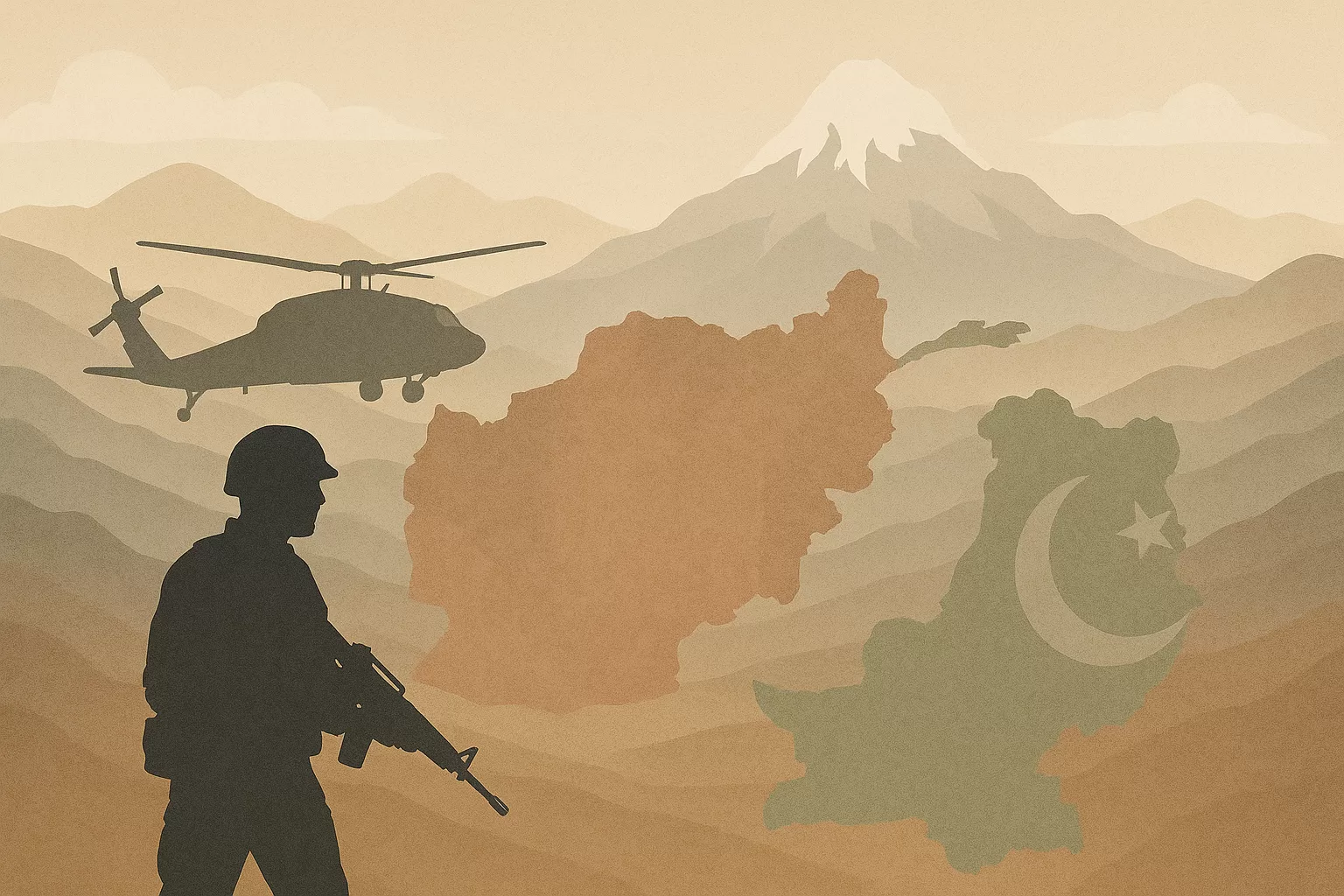
The US withdrawal from Afghanistan in August 2021 ended the longest American War. US and NATO troops fought against the Taliban for two decades and supported the Afghan government, investing almost $2.26 trillion. But when the US exited, the Taliban regained control. The withdrawal of the US also affected Pakistan.
Both countries, Pakistan and Afghanistan, are deeply connected by history, culture, trade, and sometimes conflict, sharing a long border of approximately 2,600 km. Moreover, the US exit from Afghanistan reshaped regional diplomacy, economy, and security issues. This essay discusses the impact of the U.S. withdrawal on Pakistan. It starts with the historical context, then discusses the incidents in 2021, followed by the security implications and Pakistan’s strategic challenges.
Background
From the very beginning, Afghanistan has been a sensitive neighbor of Pakistan. Afghanistan voted against Pakistan’s admission to the UN. The Durand line, which was drawn in 1893 by Durand and Emir Abdul Rehman, has never been accepted by Afghanistan’s official government.
During the Cold War and the Soviet invasion in 1979, Pakistan became the frontline ally of the US. Pakistan’s ISI supported Mujahideen, trained and armed with the support of Washington and Saudi Arabia. This war remains a problem for Pakistan, as millions of refugees have migrated. Radicalization, drug smuggling, and Kalashnikov culture emerged in Pakistan’s tribal areas, especially KPK and Balochistan.
After the USSR’s exit, the Taliban took power in Kabul in 1966. Pakistan was one of three countries, along with Saudi Arabia and the UAE, to recognize the Taliban regime. After the September 11 attacks, Pakistan supported the US by giving logistics support, air space, and military bases (IISS,2021). According to some authors, at the same time, Pakistan supported some Taliban leaders as refugees in Pakistan, adopting a dual policy – publicly supporting the US and quietly supporting the Taliban.
Security Threat for Pakistan
The Taliban victory in Afghanistan inspired the Tehreek e Taliban Pakistan (TTP), a group fighting against the Pakistani state and military. Attacks surged in KPK and Balochistan after 2021. The TTP broke the ceasefire in 2022 and started a full-scale violence. In response to this, militants from the Afghan side, Pakistan, launched operation Azm e Istekham in March 2024, targeting militant hidden places in Khost and Paktika provinces. Despite this, the security situation in Pakistan remains vulnerable, with attacks on state institutions increasing by the day.
Strategic options for Pakistan
Pakistan has many options to deal with the problems and issues that came after the U.S. withdrawal from Afghanistan. First is making the border stronger. In 2024, almost 90% of the 2,611 km Pakistan-Afghanistan border was fenced with double chain link barriers and watch systems to stop militants from crossing easily. Second is talking directly with the Taliban. For instance, on 8 January 2024, senior politician Fazl ur Rehman went to Kabul to meet Taliban leaders, where he raised concerns about the TTP and asked the Taliban to make sure Afghan soil is not used for attacks inside Pakistan.
Thirdly, on the economic side, Pakistan has been improving trade routes. At the Torkham and Chaman border, new border terminals are almost fully completed and can now handle up to 2,400 trucks daily (Pakistan Today, 2024). Trade through Torkham alone brings about $3 million in daily revenue, with nearly 1,500 trucks crossing every day. At the same time, Pakistan is trying to balance its foreign policy by keeping some cooperation with the U.S. on security matters, while also working closely with China and regional partners. For instance, Pakistan has joined trilateral talks with China and Afghanistan to boost trade, fight terrorism, and expand projects like CPEC (AP News, 2025).
Pakistan’s Stance on Bagram Airbase
Bagram Airbase near Kabul was the US’s greatest military airbase. After withdrawal in 2021, US President Donald Trump highly criticized President Biden for abandoning it. A few days ago, he said the US should take it back as its location is nearest to China’s military sites. In response, Pakistan, along with China, Russia, and Iran, opposed any foreign airbase in Afghanistan. This would violate Afghan sovereignty and bring instability, declared Pakistan. In response, the Taliban rejected the US claim to attempt to take the Bagram airbase. They cited the Doha agreement, which was signed in 2020, which prohibited foreign forces on Afghan soil. Lastly, Pakistan opposes a foreign airbase in Afghanistan and prefers Afghanistan as a buffer zone.
Conclusion
The US withdrawal from Afghanistan changed the security and landscape of the whole region, especially Pakistan. On one side, Pakistan faces terrorism from groups like TTP and ISKP, and internally, BLA. On the other side, the old Durand line dispute, migrations of millions of refugees, and cross-border clashes also add trouble for Pakistan. Furthermore, relations were not good with the US due to mistrust. Despite these difficulties, Pakistan has an option for strengthening its position, like strengthening border security, negotiations with the Taliban, reopening the Chaman and Torkham border for trade, and a balanced approach to improve foreign policy with the US and China.
Pashtana Jalalzai is an undergraduate student of International Relations Buitems University. She writes with a strong focus on local issues, tribal politics, and modern political dynamics.
Photo Credits: ChatGPT
Great Analysis…