By Sauleha Musharraf for Invisiblites
Modern women are celebrated for being ambitious and flawless with multitasking skills, yet paradoxically, beneath the glossy veneer, they suffer the same suffocating expectations that Sylvia Plath captured decades ago. The fig tree dilemma that haunts today’s woman is either having it all or failing at all.
Looking into the past pages of Plath’s metaphorical work, “The Bell Jar” reflects a portrait of modern womanhood. Esther Greenwood, the protagonist Plath portrayed as an autobiographical figure, is a bright young woman who wins scholarships, secures internships, and seems destined for success; however, beyond the surface, she feels suffocated.
What she suffers from is the invisible weight of expectations outside the bell jar. The lingering bell jar represents the haunting image of boundaries in which modern women are still being trapped by invisible pressure. This invisible pressure is the expectation of having it all: to step into corporate careers, creative ventures, curated social lifestyle, and flawless motherhood with Instagram aesthetics, hence all beckoning at once. In this sense, they are paralysed by the thought that choosing one leads to losing others. Much like Esther, who longed to be a writer, a wife, a mother, or an explorer, but ended up being nothing and paralysed into inaction, as she described her dilemma in unforgettable words:
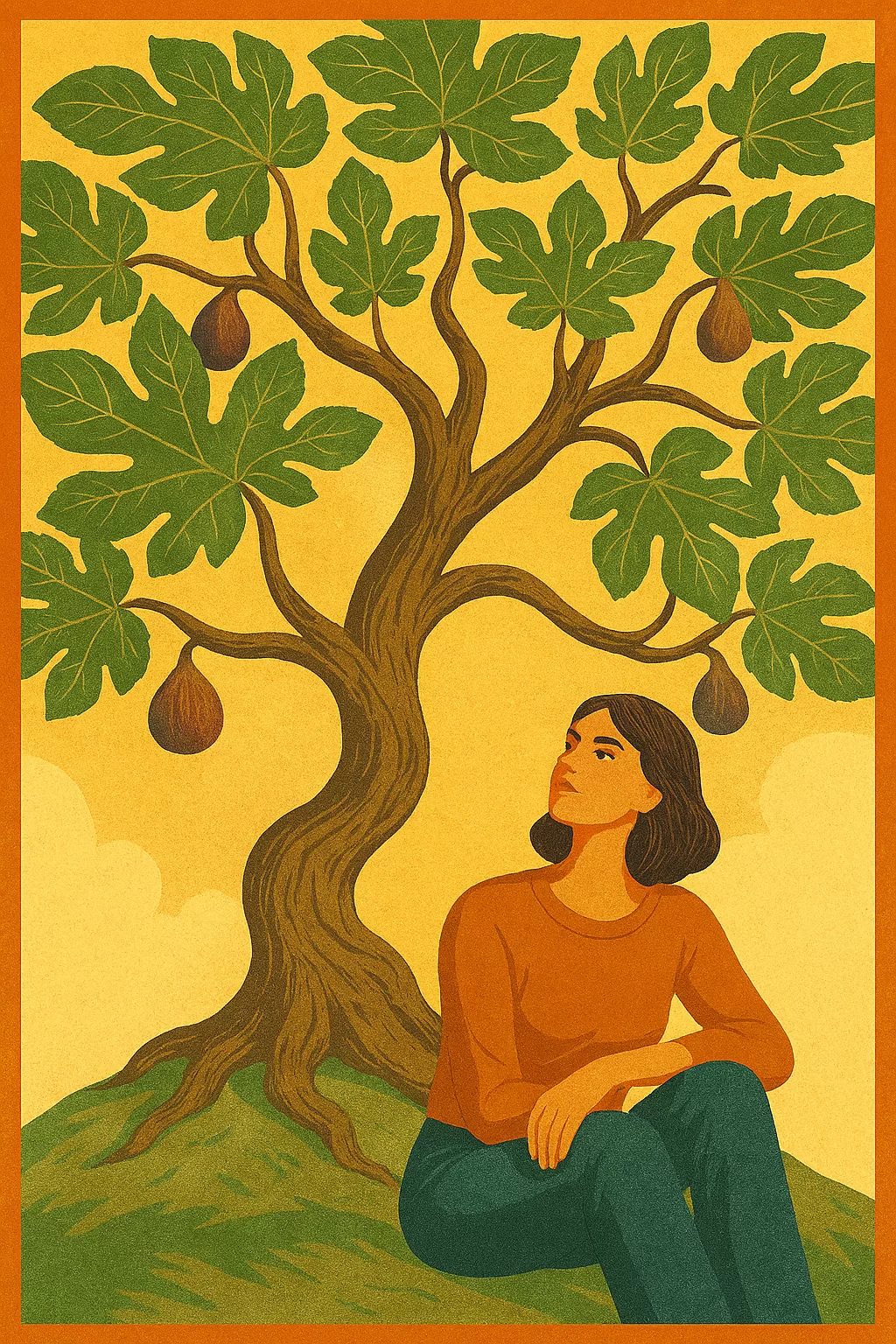
“I saw my life branching out before me like the green fig tree in the story. From the tip of every branch, like a fat purple fig, a wonderful future beckoned and winked. One fig was a husband and a happy home and children, and another fig was a famous poet and another fig was a brilliant professor, and another fig was Ee Gee, the amazing editor, and another fig was Europe and Africa and South America, and another fig was Constantin and Socrates and Attila and a pack of other lovers with queer names and offbeat professions, and another fig was an Olympic lady crew champion, and beyond and above these figs were many more figs I couldn’t quite make out. I saw myself sitting in the crotch of this fig tree, starving to death, just because I couldn’t make up my mind which of the figs I would choose. I wanted each and every one of them, but choosing one meant losing all the rest, and, as I sat there, unable to decide, the figs began to wrinkle and go black, and, one by one, they plopped to the ground at my feet.”
This represents that Esther is paralyzed by the infinite weight of possibilities rather than the lack of opportunities. The core of this dilemma is not the choice itself but the cost of it. Modern women face similar paralysis under the weight of possibility; they remain unable to choose one path that allows them to breathe freely.
Today, the branches of the tree have grown in diverse dimensions; as modern women have accomplished their feminist rights; they possess equal opportunities as men. They can run companies, sit in parliaments, head universities, be CEOs, scientists, and innovators, but still, they are exhausted. It is due to the illusion of freedom that has just expanded the vocabulary to open new doors of opportunities but has not erased the anxieties. Beneath the modern narrative of empowerment lies an invisible scaffolding of old expectations.
Paradoxically, being a corporate woman means being judged for not carrying their innate burden of domesticity, which includes shouldering unpaid care, marrying on time, to accomplishing motherhood as they are constantly reminded of their biological clocks. This brings conflicting demands, double standards, and the expectation to embody beauty with brilliance, so the modern empowerment resonates with contradictory demands of having it all and being balanced at all.
Society continues to celebrate women for excelling as the perfect picture of corporate achievers while being flawless mothers. This glorification of the “balanced woman” doing everything with better time management and resilience is the root cause of the fig tree dilemma. Those who attempt both juggle exhaustion and the quiet guilt of never being enough in either space. The result is depression, exhaustion, burnout, and ends up in alienation. Evidence from the World Health Organization states that women are more likely to experience depression than men, an emotional toll compounded by the inherent inequalities.
Yet, balancing all at once is a myth. It offers glittered opportunities with curated, perfect lifestyles, but remains detached from true emotions. As for being balanced, one has to pass higher bars of credibility, face authority gaps, and be frequently questioned for competence. Juxtaposing the girl boss that is marketed as empowerment becomes arrogant when she performs the same assertiveness that is praised in men. Moreover, International Labour Organization statistics show that the gender pay gap is still stark, as women are paid 25% less than men per hour. These exhausting double standards portray that gender constraints are more strictly endured than before in rebranded forms.
Paradoxically, Plath’s shining bell jar has been replaced by shining smartphone screens, where platforms of liberation become platforms of scrutiny, breeding more anxieties. The wave of “that girl” aesthetics on social media, to wake at dawn, eat and drink green, stay hydrated with Stanley, run a startup, and stay flawlessly styled, all unfold while domestic labour remains invisible beyond these screens. Thus, empowerment becomes performative politics measured through likes and shares, reinforcing the sense that no achievement is enough for being perfect. Eventually, they end up in alienation and existential crisis, similar to Esther, drifting towards a bleak phase of life.
However, out of despair, Esther insisted to herself, “I took a deep breath and listened to the old bray of my heart, I am, I am, I am,” and challenged the invisible societal norms to breathe free of these anxieties. That defiant “I am” continues to echo through modern women’s struggles for visibility, respect, and agency. They are navigating a world of new freedom, but they are also exhausted by the demand to balance all. The true liberation lies in breaking the illusion of being perfectly balanced. The honest way of survival is to live imperfectly with feminine values, without carrying the same paralysis over generations and rejecting the tradition of being born with programmed fig tree dilemmas.
Ultimately, individual performance is not enough to break through this dilemma; it requires the cooperation of society to bring structural changes: to not just provide access for women but also the agency to define their own lives without suffocation. To normalize family leave for all genders, to value domestic labor, and to dismantle gendered codes of behavior in social affairs. Yet, it means reimagining empowerment as freedom to choose some figs while letting others fall and still be valued for the fullness of their humanity.
Sauleha Musharraf is an experienced freelance content writer and a citizen journalist.
Photo Credits: Microsoft Copilot
kudos! A very well said portrayal of women uncanny suffering.