By Dr. Atta Ur Rehman for Invisiblites
Some of the world’s poorest and most unstable places sit on top of great mineral wealth. This is the strange reality seen in regions like Balochistan and Afghanistan. Despite being rich in gold, copper, lithium, and rare earth elements, these areas remain stuck in poverty, violence, and unrest. This is known as the paradox of plenty, and it often leads to what experts call the resource curse.
The resource curse is when countries or regions with abundant natural resources suffer from corruption, conflict, and underdevelopment instead of benefiting from their wealth. In these places, powerful groups—including militant groups, foreign companies, and sometimes even government actors – exploit natural resources for profit, while local communities are left out and pushed further into hardship.
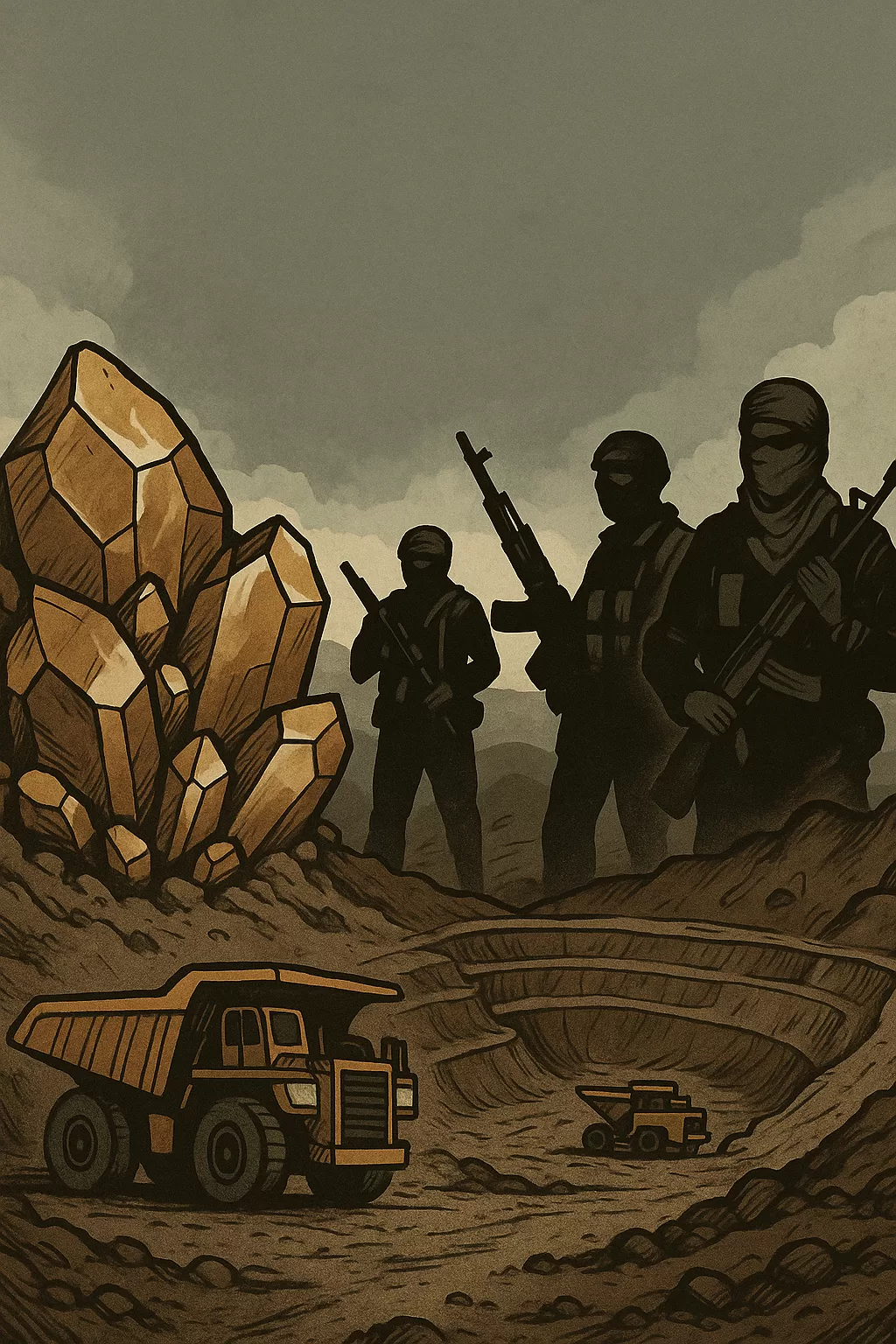
One major issue tied to this problem is the rise of conflict minerals. These are natural resources—like talc, lapis lazuli, or chromite—that are mined in areas of armed conflict and are often used to fund violence. In Afghanistan, the Taliban has made millions by controlling and taxing mining operations. In Balochistan, Baloch nationalist insurgents have attacked or resisted foreign mining projects they view as unfair and exploitative.
The effects of this go far beyond South Asia. Minerals pulled from these unstable regions can end up in smartphones, electric vehicles (EVs), and jewellery sold across Europe, the United States, and other parts of the world. This means everyday products may unknowingly be linked to human rights abuses, illicit trade, and armed violence.
The Resource Curse: Wealth Without Development
Having valuable natural resources like gold, copper, or lithium is a blessing. But in many parts of the world, it often brings the opposite. This is known as the resource curse—a situation where instead of helping people, resource wealth fuels corruption, violence, and poverty.
In places with weak governance, there are few checks on power. That means the profits from mining often go into the hands of elites, foreign investors, or armed groups—not the people who live near the mines. This creates serious problems, including natural resource conflict, lack of public services, and rising frustration in local communities.
Take Balochistan, for example. This region in Pakistan is rich in gold, copper, and chromite. Yet, it remains one of the country’s most underdeveloped areas. Many local communities live in poverty, even while massive projects like the Reko Diq and Saindak mines continue to extract valuable minerals. The lack of regional benefits, along with environmental damage, has sparked anger and resistance, feeding into ongoing unrest and insurgency.
A similar pattern exists in Afghanistan, where the country holds over $1 trillion in mineral wealth, including high-demand resources like lithium, talc, and lapis lazuli. These minerals could power the country’s future, especially as the world shifts toward green energy. But instead of helping rebuild the economy, mining profits have often flowed to warlords, corrupt officials, and the Taliban, who use the money to fund their operations.
Without fair systems in place, mining and local communities often end up on opposite sides of the equation. Natural resource conflict becomes a cycle—wealth brings interest, interest brings exploitation, and exploitation brings resistance.
The lesson from both Balochistan and Afghanistan is clear: minerals alone don’t bring development. Without strong institutions, community inclusion, and transparent governance, resource wealth becomes a cause of suffering, not progress.
Minerals as a Funding Source for Militancy
In many conflict zones, natural resources don’t just attract outside investors—they also attract militant groups looking for easy income. This is especially true in places like Afghanistan and Balochistan, where illicit mining has become a significant source of insurgent financing.
In Afghanistan, the Taliban has made millions by controlling and taxing mining operations. They have especially profited from the mining of talc, lapis lazuli, and other valuable minerals. These resources are often mined informally, moved through smuggling networks, and sold into the global market, fueling what experts call the shadow economy—a hidden system of trade that operates outside official rules.
One of the most well-known sites is Mes Aynak, a historic area rich in copper, where mining has long been tied to political tension, foreign interest, and Taliban activity. Another key site is Hajigak, known for its iron deposits, and Ghazni, where lapis lazuli and talc are often extracted in areas under militant control.
These operations not only fund the Taliban but also weaken the government’s ability to control its resources. With no proper regulation or oversight, armed groups continue to grow stronger, while local people see little to no benefit from the wealth beneath their feet.
A similar situation exists in Balochistan, where Baloch nationalist insurgents have targeted or taxed state-backed mining projects. These groups view large-scale mining—especially by foreign companies—as exploitative and unfair. Attacks on projects like Reko Diq or Saindak are not just about minerals; they’re about a deeper fight over political rights, economic justice, and local control.
In both regions, mining has become deeply tied to militant groups and resources. Instead of supporting peace and development, it fuels ongoing conflict and instability. The connection between minerals and militants is a growing threat—not only for the countries involved but for the global supply chains that rely on these resources.
Foreign Exploitation and Local Resentment
While local groups struggle with poverty and violence, foreign companies have stepped in to tap into the region’s rich mineral deposits. One of the most active players is China, whose growing demand for natural resources has led to significant investments in Balochistan and Afghanistan. But instead of bringing peace or prosperity, these projects have often created more tension.
In Pakistan, Chinese firms are heavily involved in large-scale mining projects like Reko Diq and the Saindak copper-gold mine. These operations are part of the wider China-Pakistan Economic Corridor (CPEC)—a multibillion-dollar initiative aimed at improving trade routes and infrastructure. However, CPEC has also become a risk zone, with frequent attacks, protests, and rising resentment from local communities.
Many people living near these mines feel left out. They see foreign investment in unstable regions as another form of exploitation. Promised jobs and benefits rarely reach them, while environmental degradation, land displacement, and loss of livelihood become daily realities. Forests are cleared, water is polluted, and ancient lands are dug up without proper consultation.
To make matters worse, these projects are often protected by heavy security, including the Pakistan Army and Frontier Corps (FC). This leads to a growing sense that development is being forced on the region without consent. Instead of trust, there is fear. Instead of progress, there is pushback.
Corruption in mining contracts adds fuel to the fire. Deals are often made behind closed doors, with little transparency or concern for community impact. This creates the perception that both local officials and foreign investors are benefiting—while ordinary people pay the price.
The result is a dangerous mix of foreign exploitation, local resentment, and deep-rooted anger. These feelings don’t just stay local—they drive resistance movements, weaken trust in the government, and sometimes push people toward militancy.
Smuggling and the Global Illicit Mineral Trade
The dangers of conflict minerals don’t stop at the borders of Afghanistan or Balochistan. In fact, many of these minerals make their way into global markets through smuggling, ending up in everyday items like smartphones, electric vehicle (EV) batteries, and jewellery. This hidden supply chain is part of the larger illicit mineral trade—a global issue that connects remote war zones to major consumer economies.
Smuggled minerals often bypass customs, taxes, and safety checks. In Afghanistan, for example, talc and lapis lazuli are illegally mined and transported through neighbouring countries like Pakistan and Iran, then quietly enter international markets. Profits from these sales help finance armed groups like the Taliban, further fueling violence and instability.
This isn’t just a South Asian problem. The same pattern has been seen in other regions. In the Democratic Republic of Congo (DRC), conflict minerals like tin, tantalum, and gold have long funded rebel groups. In Sierra Leone, the illegal trade in blood diamonds was linked to a brutal civil war. In Myanmar, rare earth elements and jade are extracted under the control of military-backed networks. These examples offer a comparative perspective that shows how natural resource conflicts can become global threats when left unchecked.
Despite existing international mining regulations, such as the OECD Due Diligence Guidelines and the U.S. Dodd-Frank Act, many of these minerals still slip through. Enforcement is weak, especially outside of Africa, and countries in South Asia often lack the resources or political will to monitor trade effectively.
For global consumers, this creates an uncomfortable reality: the phone in your pocket or the battery in your car might contain materials tied to war, exploitation, or environmental destruction. Without stronger oversight and conflict-free certification systems, the illicit mineral trade will continue to thrive in the shadows.
Regulatory Gaps and Inconsistent Oversight
While global efforts to clean up the mining industry have made progress, many of the rules in place are either limited in scope or poorly enforced. The two most recognized frameworks—the Dodd-Frank Act (U.S.) and the OECD Due Diligence Guidance—were designed to stop the flow of conflict minerals into global markets. But there’s a significant issue: they focus primarily on Africa, leaving out countries like Afghanistan and Pakistan, where similar problems are growing.
This Africa-centric approach creates significant regulatory gaps. In South Asia, smuggling, corruption, and militant financing through mining continue with little interference. As a result, the same minerals that fuel conflict in these regions can still enter international markets without being properly tracked or labelled. That’s a significant weakness in the push for ethical mineral sourcing.
What’s needed now is a shift toward universal frameworks—standards that apply to all high-risk regions, not just a few. Groups like the Extractive Industries Transparency Initiative (EITI) aim to promote transparency in extractive industries by encouraging countries and companies to disclose contracts, payments, and ownership. However, participation in EITI is voluntary, and many conflict-affected nations haven’t fully embraced it.
Other tools, such as the UN Guiding Principles on Business and Human Rights and the Kimberley Process (created to stop the trade in blood diamonds), offer valuable guidelines but lack strong enforcement mechanisms. Without proper monitoring and legal pressure, these frameworks remain more symbolic than practical in many unstable regions.
Until we close these oversight gaps and apply standards equally across all regions, the global effort to stop conflict minerals and ensure ethical sourcing will fall short. It’s not just about better laws—it’s about making sure those laws actually reach the places where they’re most needed.
Toward Ethical and Peaceful Resource Governance
If the world wants to stop minerals from fueling war and inequality, it must rethink how resources are managed—especially in conflict zones like Balochistan and Afghanistan. This means moving beyond just profit and focusing on human rights in mining regions, environmental protection, and fair treatment of communities. Several key policy solutions can help guide this shift.
First, there must be transparency in contracts and ownership. Many mining deals are made behind closed doors, involving hidden partners and corrupt intermediaries. By enforcing beneficial ownership disclosure, we can see who really profits from these operations and hold them accountable.
Second, community inclusion is essential. Locals who live near mining sites must have a say in how the resources are used. This includes offering revenue-sharing mechanisms so that profits from mining actually support schools, hospitals, and infrastructure in the affected areas. When people see real benefits, they are less likely to resist development—and more likely to support peace.
Environmental safety is another priority. Large mining operations often ignore the damage they cause to land, water, and air. Governments should require complete Environmental Impact Assessments (EIA) before any major project begins. This helps protect both the environment and the communities who depend on it.
To make all of this work, strong institutions are needed. Organizations like Global Witness, Transparency International, and the World Bank play a vital role in promoting ethical resource governance. They track corruption, support clean development, and offer tools for reform. Their work can help ensure that conflict-free certification becomes more than just a label—it becomes a reality.
Finally, we must view mining reform as part of broader peacebuilding through resource justice. When handled correctly, natural resources can support stability and growth. But when abused, they deepen conflict. The path forward requires fairness, openness, and a deep respect for the people who live on the land.
Conclusion
The story of minerals in regions like Balochistan and Afghanistan is a powerful reminder of what happens when natural wealth meets weak systems. Without urgent reform, these resources will continue to be hijacked by militant groups used to fuel violence, corruption, and instability.
But this doesn’t have to be the case.
With strong governance, clear transparency in extractive industries, and genuine community inclusion, minerals can shift from being a source of conflict to a force for peace and prosperity. Through tools like conflict-free certification, environmental safeguards, and human rights protections, it is possible to turn today’s shadowy trade into tomorrow’s responsible development.
Governments must lead with policy and enforcement. Foreign companies need to invest responsibly and be held accountable. And civil society organizations—from Global Witness to Transparency International—must continue to push for fair, open, and ethical resource management.
The path forward is clear: minerals should enrich communities, not destroy them. Let’s turn this promise into a reality—before it’s too late.
This article was originally published in Sustainable Mining Systems and has been republished with their approval.
Dr. Atta ur Rehman is an accomplished energy and mining scientist with a diverse professional background spanning public service in Pakistan and industrial experience in both the United States and Pakistan. His expertise bridges applied research, policy analysis, and industry operations, with a strong focus on the strategic importance of mineral resources.
He has conducted extensive research on U.S. critical minerals and their role in shaping the nation’s long-term energy security and reducing foreign dependence. His work integrates scientific insight with policy relevance, addressing supply chain resilience, sustainable resource development, and the geopolitical dimensions of mineral sourcing. Contact him at aurc42@gmail.com
Photo Credits: Sora